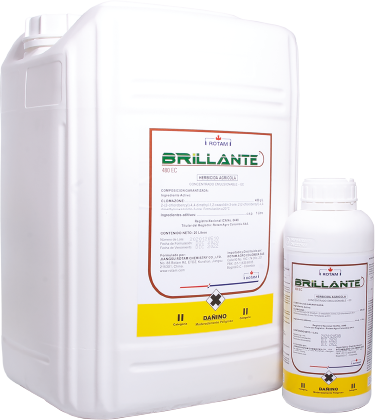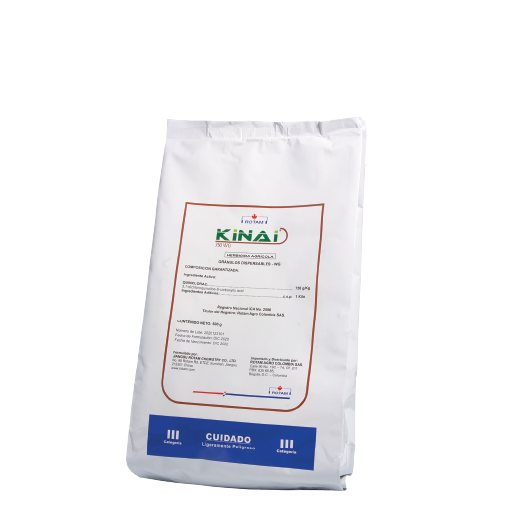
Mechanism of action. Quinclorac is considered a growth regulator as a synthetic auxin due to its IAA-like effects (HRAC 4), and is also an inhibitor of cellulose synthesis for the cell wall matrix (HRAC 29). They are called auxins, because this class of herbicides imitates the action of the plant's natural auxins, causing rapid and uncontrolled growth. The site of action is thought to be the hormone receptors within the cell, but the full site of action is not yet understood.
Action mode. Quinclorac is a rice-selective systemic herbicide recommended for the control of Echinochloa sp. species, other grass weeds and broadleaf weeds. Quinclorac in the pre-emergence of the crop and weed is absorbed by germinating seeds, by the roots and through the leaves, controlling the emerging population and that which emerges after application. In the post-emergence period, Quinclorac is absorbed by the foliage of the weed. Quinclorac presents movement through the phloem (KowLogP = -0.74; pKa = 4.34, 20°C) (MacBean, C. 2012. The Pesticide Manual) and is therefore basipetalous, translocating from the foliage downwards and towards the root.